mfk etiketine sahip kayıtlar gösteriliyor. Tüm kayıtları göster

3 Aralık 2008 Çarşamba

reCycld


reCycld is a self-consciously Web 2.0 working name for what will become a community-oriented portal dedicated to facilitating the crafting of recycled materials.

Rationale

Any reuse/repurposing/recycling (RRR) of materials keeps them out of landfills and limits the loss of the value and value-added attributes of the materials. Helping to do this by recognizing and encouraging crafters who use reused/repurposed /recycled materials is reCycld's most obvious purpose. In addition, we hope the portal will have the following possibly more significant consequences:
  • Underscoring and the practicability of RRR in general.
  • Underscoring the value left in RRR materials.
  • Promoting cottage industries for trading in crafted RRR products and raw materials.
  • Inspiring larger industries to use RRR materials.
Description
The intent is for reCycled to be a self-maintaining, community-driven resource. To that end, we have chosen to focus on what we are calling a “social blogging” interaction paradigm—essentially a hybrid of blogging and social networking. The vision for the site is a home base that chronicles developments relevant to the site's interests from the world-at-large and from community contributions, coupled with sub-sites that individual members will use to feature their own work and develop social and/or commercial connections.

Membership will be open to the public; however, site administrators will be authorized to deal with accounts that engage in abuse of the site's resources.

Development

Ideally, design decisions would dictate the technological infrastructure for a project like this. But it's important that this project be implemented in a short ten-week time frame and that it be entirely community supportable—especially after the original developers have left the project. These requirements all but rule out custom-coded portal infrastructures and suggest the most workable solution is to adopt a mature and community-supported CMS framework.

After evaluating available options, we have chosen to base development on a WordPress-MU core. WordPress and WordPress-MU are widely supported and very usable blogging solutions. To adopt the WordPress-MU core to our purposes (the addition of "social" functions, etc.), a variety of off-the-shelf extensions have been added and in some cases considerably modified.

User analysis, activity analysis and interaction models for the site are essentially complete at this point.
From the home page, connections are provided to individual member contributions via editor-posted feature articles, automated listings of new contributions, and automated listings new memberships. Members are able to create a social experience by listing and linking to “friends” from within the system on their sub-sites. Planned for the future but probably not implementable within the target time frame is an e-commerce functionality that would allow community members to directly market their crafted goods or supplies.

A private alpha version of the site is available on the Web; in the upcoming weeks we will be working on branding issues and refining the interaction. We expect to be out of private beta in mid-January.

A major challenge for this project will be finding an appropriate permanent host. The host must be willing to offer large and scalable storage—on the order of 1 GB per 100 members—and be able to provide full domain hosting, a complete AMP stack, and SMTP services. If you are interested in volunteering hosting services, please let us know in the comments!
Devamı

31 Ekim 2008 Cuma

Unbanned


But for how long? Devamı

26 Ekim 2008 Pazar

Banned


We are currently banned. How fun is that? Devamı

17 Ekim 2008 Cuma

After the trash is gone


Skip conversions by Oliver Bishop-Young. There's more.
[via Make]
Devamı

16 Ekim 2008 Perşembe

Ovetto Differenziato


Gianluca Soldi's design for a recycling bin makes me wonder how big it is. Links to other bins are at the bottom of the page. Devamı

15 Ekim 2008 Çarşamba

Motivating user compliance

Sungwoo Park designed a used battery collector. It may have some usability/reliability issues, but in spite of this I think it's a neat idea because it helps motivate user compliance. Anyone using the device to dispose of batteries gets some feedback--albeit indirectly. [via Gizmodo]

Devamı

8 Ekim 2008 Çarşamba

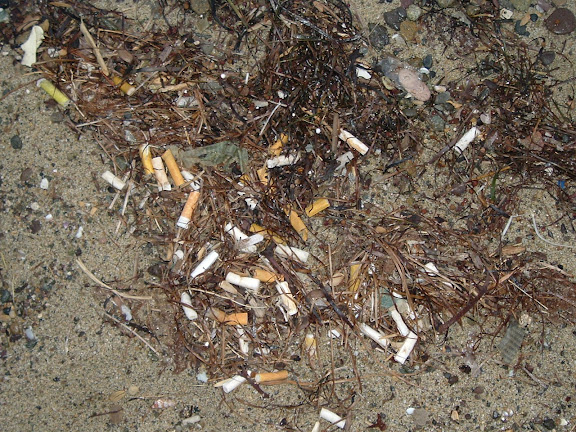
Old habits die hard


Random shots from a walk along the beach in Sarimsakli (Ayvalik), Turkey. Devamı

If there is a will, there is a way


You wouldn't think that information and communication techologies should rely on trash generation, but this apparently isn't the case.

Are we obsessed with making trash? Has the generation of trash replaced urination as a means of marking territory? Devamı

Water


See
the irony. Devamı

Swimming, anyone?


From Wikipedia: "The Great Pacific Garbage Patch ... is an area of marine debris in the central North Pacific Ocean ... characterised by exceptionally high concentrations of suspended plastic and other debris that have been trapped by the currents of the North Pacific Gyre." Devamı

6 Ekim 2008 Pazartesi

Designer guilt

About a gazillion years ago, Victor Papanek shared with us his belief that "There are professions more harmful than industrial design, but only a very few of them" [1]. Since then, his descriptive account of the relationship between design, business, and society has formed a nucleus of ambivalence for many designers and design theorists. "Sure, we love design, but you can't get away from the fact that we're really just whores of an exploitational capitalist system of artificial consumption."

Design can do better than that.

A rose by any other name
Part of the problem is the name given to Papanek's offender. In the United States, the target of Papanek's grudge is most commonly known as industrial design. I have to confess that when I first heard this term, I was pretty confused. "The people who design the tools and artifacts we use in living are called 'industrial designers'?" It seemed to me that the term 'industrial designer' ought to identify someone who designs industry, not things.

It turns out an "industrial designer" is someone who designs for industry. And this I found quite curious. Other fields of design--graphic design, interior design, landscape design, to name a few--are identified in terms of the output or target of their efforts. However, industrial design is defined in terms of its relationship to a means of production.

A quick examination of history will help us to understand why: industrial design was born in the West out of the Industrial Revolution. And the relationship of captains of industry to capitalism and hyper-consumption has been well documented by others. Part of industrial design's bad rap owes itself to this historical happenstance. But "people's revolutions" weren't revolutions against the machines--they were revolutions against the owners of the machines. What this means for those who insist on viewing Papanek's grudge target as industrial design is that a hyper-consumptionist implementation of "industry" is only one of several possible implementations. Therefore Papanek's bemoaning of the field is completely and entirely contextual.

Others have objected to creating a close tie between the designers of artifacts we use in living and a prescribed means of production, and they have tried to create a more useful, more abstract term to identify the field. The most common alternative that I am aware of is product design. The elegance of this term is that, like other fields of design, it identifies a design specialty based on the end result rather than an expected means of production. It thus frees designers to think in more general terms about the artifacts with which they are concerned. The biggest problem with this term is the meaning associated with the word "product." "Product" is a marketing term, and so "product design" doesn't go as far as it could to separate the designing of things from the market system under which they have traditionally been developed and distributed.

In Turkey, it seems an effort was made to embrace both of these terms. Here the discipline is known as industrial product design. But in trying to incorporate both industrial and product, this hybrid manages to merge the worst of each. An industrial product designer is one who is expected to design Products (a specific marketing concept) using Industry (a specific means of production).

The big however
The important thing to recognize here is that industrial design, product design, industrial product design, and any other permutation of the preceding are only names--names created by simple humans like you and me. They involve generalization. They connote and denote. They are social constructs. And it's up to you to be limited by them or not.

[1] Victor Papanek, "Preface to the First Edition," in Design for the Real World: Human Ecology and Social Change, 2nd ed. (Chicago: Academy Chicago Publishers, 1985), ix.
Devamı