2 Aralık 2009 Çarşamba

Climate change: The carbon atlas


New figures confirm that China has overtaken the US as the largest emitter of CO2. This interactive emissions map shows how the rest of the world compares. Global C02 emissions totalled 29,195m tonnes in 2006 – up 2.4% on 2005.

Click here to view the interactive graph.

via Guardian Devamı

"Basic Fact" Posters from UNEP


Source: OECD Environment Statistics
Years of data are variable between 2003 & 2005 except for New Zealand which is from 1999.
via JunkCharts

More can be found here Devamı

19 Mart 2009 Perşembe

Of meat and water

Good has a graphic showing water use for typical activities and lower-impact alternatives. Check out the beef!

via Lifehacker Devamı

19 Ocak 2009 Pazartesi

THE ANTI-CONSUMERIST ACT


INTRODUCTION

Curiously, entrance of industry to people lives and more accessible and cheaper products which enhanced quality of life has come along at same times with rapid consumption of many physical and intangible resources. More quality of life has been enhancing by comsuming, more consumption has been increasing by enhancing of living standarts. This innocent and small desires like snowball have been rolling which become big mass today that can not be prevented.

The name of this mass is “over-consumption” in literature. Today, many people are aware of excess of decrescent resources, harmfull products and wasted money. So how much difficult is to prevent it?

PURPOSE

Anymore, It is not possible to stop production which harms people, to embarrass consumption and to be back to early centuries. Consequently, acts of anti- consumption are not offensive, but deffensive. Some treatments of people who take measures are like below:

- Less consuming with awareness

- Consuming normally but buying more environment and people friendly products

- Consuming normally but making recycle

Although this actions are beneficial, they can be found weak to make people aware. In this phase, there is only one way to embarrass over-consumption, millions ton of waste and harm to both people and nature.

“No consumption instead of less consumption!”

In this project, it is thought that acts must be not offensive, but deffensive so as to make people aware of this utopian attitude. It must be dramatically displayed how much detrimental effects of individual consumption are for world and how much harmful is over-consumption.

METHOD

By demanding that everything must be shown damatically, it was thought that visual elements which is most memorable and affective method should be used.

Video consist of three scenes:

1. Shown individual consumption

2. Shown heightening waste

3. Shown consumption within global context


1. SCENE

2. SCENE

3. SCENE

On this scene, individual consumption which is done in one day is shown. It is aimed to be shown products which are bougth, used and not noticed and their waste. Size of consumption habits of individuals and their global effects are displayed in quick mode.

On this scene it is shown products which are used by both a person and every people and become waste. This amount of waste is increasing gradually and the scene become full with photographs of waste and products.

On this scene consumption is shown with global context and in all respects. Consumption of every kind of consumption matters such as goods, systems, products, physical matters, masses, intangibles, nutritions etc. and their consequences are displayed rapidly as stop motion. It is also aimed that people will evaluate the complicated situation which people and the world are in while watching this complicated mixture of photos.


GİRİŞ

Gariptir ki, endüstrinin insan hayatına girmesi ve bu sayede “medeni” insanların “hayat standartlarını yükselten” ürünlere hızla ulaşabilmesi ile bir çok maddi ve manevi kaynağın hızla tükenmesi aynı döneme rastlar. İnsanlar tükketikçe yaşam standartları yükselmekte, iyi koşullarda yaşadıkça da tüketecek daha iyi şeyler istemektedirler. Bu masum ve kartopu kadar küçük istekler yuvarlanarak günümüzde önüne geçilemez dev bir kütle haline gelmiştir.

Bu kütlenin literatürdeki adı “tüketim çılgınlığı”. Artık düyanın büyük bir kısmı tüketilen kaynakların, bu kaynakların dönüştüğü ürünlerin çevreye verdiği zararın, harcanan paraların aşırılığının farkında. Peki önüne geçmek ne kadar zor?

AMAÇ

İnsana ve kaynağa zarar veren üretimi durdurmak, tüketimi engellemek, yani her şeyi yüzyıllar öncesine geri döndürmek artık pek mümkün gözükmüyor. Bu nedenle tüketim karşıtı yapılan eylemler de saldırı değil savunma niteliğinde. Söz konusu durum gündeme geldiğinden beri alınan farklı tedbirler şu şekilde:

- Daha az tüketmek ve bilinçli tüketmek,

- Tüketimi azaltmamak, ancak daha çevre dostu malzemeler kullanmak,

- Tüketimi normal seyrinde devam ettirmek ancak atıkları geri dönüştürmek,

Bu eylemler her ne kadar yapıcı olsalar da insanlarda farkındalık yaratmaları açısından zayıf kalabiliyor. Bu aşamada tüketim çılgınlığının, çıkacak milyonlarca ton atığın, hem insana hem doğaya verilen zararın önüne ancak bir durumla geçilebilir:

“Az tüketmek yerine hiç tüketmemek!”

Bu projede, insanları bu ütopik bilince ulaştırabilmek için eylemlerin savunma değil saldırı şeklinde olması gerektiği düşünülmektedir. Bir kişinin bireysel olarak yaptığı tüketimin dünya genelinde ne kadar büyük bir etkisi olduğu insanlara vurucu bir şekilde aktarılmalı ve aşırı tüketimin zararı insanların gözleri önüne çarpıcı bir şekilde serilmelidir.

YÖNTEM

Projede aktarılanın çarpıcı olmasının istenmesi nedeniyle, en etkili yöntem olan görsel öğelerin kullanılması düşünülmüş ve video enstelasyonu uygulanmasına karar verilmiştir.

Video üç ekrandan oluşmaktadır.

1. Bireysel tüketimin gösterildiği ekran

2. Biriken atıkların gösterildiği ekran

3. Küresel boyutta tüketimin gösterildiği ekran

1. EKRAN

2. EKRAN

3. EKRAN

Bu ekranda bir kişinin bir gün içinde yaptığı bireysel tüketim gösterilmektedir. Gün içinde satın alınan, atılan, kullanılan, tüketildiği farkına varılmayan çeşitli ürünlerin ve bunların atık hallerinin de dikkat çekmesi istenmektedir. Alışkanlık haline gelmiş tüketim davranışları hızlandırılarak gösterilmekte ve bunun her insan tarafından yapıldığında etkisinin ne ölçüde olduğu vurgulanmaya çalışılmıştır

Bu ekranda hem bir kişi, hem bütün insanlar tarafından kullanılan çeşitli ürünlerin kullanıldıkça atık haline geldiği ve git gide arttığı gösterilmektedir. Ekranı, fotoğraflarla, çoğalan çöpler kaplamaktadır.

Bu ekranda, her türlü tüketim, küresel boyutlarıyla, her yönüyle gösterilmeye çalışılmıştır. Tüketilen nesneler, sistemler, kitleler, manevi değerler gibi her türlü tüketim malzemesi ve bunların sonuçları stop motion olarak ardarda ve hızlı bir şekilde ekrana gelmektedir. İnsanın, içinde bulunduğu durumu sorgulaması ve ardarda, hızla gelen görsellerin karışıklığının sistemin de karışıklığıya bağdaştırılması amaçlanmıştır.


Devamı

İçelim, Çevirelim

Şişe, şişe ve daha fazla şişe Arkadaşlarla geçirilen hoş sohbetle bezenmiş bir gece ya da yorucu bir sınavın akşamı, belki loş ışık altında en damar şarkılarla bir efkar gecesi; içelim güzelleşelim temalı ortamlar. Peki bu güzel anların ardından kafayı çevirip baktığımızda gördüğümüz ne?? Yığınlar; güldüren, düşündüren, yaratıcılığı teşvik eden bira şişeleri.
Evde olduğunda resmedilecek ya da arkadaşlar arasındaki geyiğe ivme kazandıracak bir yığın olarak görülse de bira şişeleri, kamusal alanda daha çok düzeni ve çevreyi yok eden unsurlar olarak göze çarpıyor.


Bu bira şişelerinin geri dönüşüm adına önemi düşünüldüğünde; iki tek atmanın tadına doyum olunmayan bu mekanlarda "iki tek"in sonucu oluşan yığınları da toplamak gerekiyor. Buna yönelik bir tasarım: "İçelim-Çevirelim"


Devamı

29 Aralık 2008 Pazartesi

PACKAGE DESIGN AND SUSTAINABILITY PROJECT - by bilge

DESIGN BRIEF
PACKAGE DESIGN AND SUSTAINABILITY

CONTEXT


The importance of packaging can not be rejected in todays consumption community. Because of the fact that package is the first meeting point of user and product, too much criteria enters into the design process and in this manner package gets further from the main purpose.(useage of unnecessary metarial with full of graphics to effect the customer or ignoring the importance of sustainability etc.)


PURPOSE

Examination of packaging in terms of the sustainability by taking into consideration in its historical process. Also specifying some models and create new design alternatives fort them.


More..

I am one of the participant of “Sca Packaging Competition “ which is looking for enviromentaly friendly package designs for chocolate.

Project name: OFFICE CHOCOLATE TIME..!

1. office chocolate time_1
This project is quite environmentalist by reusing of its package as post-it and also helpful to your office life with its calendar chocolate.


2. office chocolate time_2
We are all working and spend too much time in the offices. We only have some small pleasures during working. That is; drinking coffee and eating chocolate. Almost all of us do this.


3. office chocolate time_3

It is quite easy to tear its package and eat chocolate because of their serrations.


4. office chocolate time_4
You can reuse each piece of package as post-it in the office. In this manner, your paper consumption would be decreased, it is important for environment.


5. office chocolate time_5
Chocolate is shaped as calendar due to the fact that dates are very important in office life likewise your fitness. Only one piece each day !


6. office chocolate time_6
It will be produced for monthly usage.
Devamı

17 Aralık 2008 Çarşamba

BENCHMARKING SOLID WASTE MANAGEMENT APPROACHES: COMPARING KADIKOY / ISTANBUL TO THE STATE OF ART


We all know that we generate waste and when we think about it we feel that something could and ought to be done to reduce or recycle what we discard. We are approaching to 21st century and we strongly need to do something to reduce the levels of waste being produced and massively increase the recycling and reuse of our municipal waste. Waste collection for recycling includes paper, cardboard, textiles, plastic, metals, and glass.

According to Richard Waite waste management comprises three elements: recycling, waste collection and waste disposal. Recycling means that items normally disposed of in landfill sites (large holes in the ground) or burnt can be reprocessed and remade into many useful products. Every item we recycle makes a difference in the consuming world.

As a flowchart in UK, waste management is the responsibility of local authorities, such authorities being district or borough councils, county councils and metropolitan authorities. Collecting waste for recycling or composting is done in two main ways in London- by collection from households or by using “bring” facilities where residents take their recyclables to collection centers. Recycling as a proportion of waste management is increasing slowly from five percent of municipal waste in 1996/97 to eight per cent in 2001/02. Tonnages are increasing and more recycling is collected each year, but so is more waste. The majority of London’s waste is sent to landfill and 19 per cent of municipal waste is handled by two incineration plants; one at Edmonton and other at Lewisham. (Rethinking Rubbish in London The Mayor’s Municipal Waste Management Strategy, September 2003)

In our country Kadıkoy Municipality is working very disciplined and caring to environmental issues and especially solid waste management system and unlike other municipalities in Istanbul, sorting waste center exists. According to the Kadıkoy Municipality Solid Waste Management Plan for 2008, since 2000 packaging waste is collected separately in Kadıkoy. Approximately 17.300 tones of paper and 1.318 tones of plastic and 496 tones of metal waste are collected. 10 tone of paper waste is added to paper clay and 20 trees are prevented from being cut so it makes 346.000 trees are saved since 2000.

Objectives:

To provide an understanding of developed countries’ waste management systems from the point of stakeholders and municipality and comparing to Kadıkoy’s waste management flowchart.

To Generate of a map by marking the differences and differentiating the points between “state-of-art” and Kadıkoy Waste Management system with the help of researching the problems beneath.

To find a solution to one of the problems in Kadıkoy waste management system and to design a product that’s going to encourage people living in Kadıkoy to recycle.

Project Time Outline:

7th of October: Submission of the general outline of the project and objectives
14th of October: General Outline of the waste management system in Kadıkoy General Outline of the WMS as a state-of-art.
21st of October: Presentation of the comparison of models and generating a proposal, studio critics.
28th of October: Concept Sketches according to the results of the comparison. Presentation of the 3d model of the product, studio critics
19th of December: Pre-jury
26th of December: Finalizing according to the critics after pre-jury
15th of January: Final Jury

Project Requirements:

• The systemic analysis of the waste management system models on behalf of stakeholders and municipals
• Determination of the proposal, comparing models of Municipal Waste Management Systems
• The systematic evolution of the idea and design
• Design concept, creativity, logic and use of materials.
• Functionality and marketability.
• Depth of research for solution, developmental work, exploration of variety of approaches and ideas in an effort to seek out the optional solution. Devamı

12 Aralık 2008 Cuma

GERİLLA DÖNÜŞÜM // Proje Raporu

GERİLLA DÖNÜŞÜM
İLLA GERİ DÖNÜŞÜM!


Misyon:
Mevcut durumuyla halkın geri dönüşüm yapmasına imkan sağlayan coğrafyadaki kitle, imkanları konusunda bilinçlendirilmelidir.

Bu biliçlendirme, bölgedeki kitlenin profili göz önüne alınarak tasarlanan gerilla pazarlama kampanyaları ile sağlanacaktır.


İlk bulgular


Public education and awareness

Introduction:


Trash is one of the biggest tragic facts of the world. Production of trash will never end. But starting from local, to deal with the environmental issues, it is crucial to have a proper waste management system. As defined in Wikipedia, waste management is “the collection, transport, processing, recycling or disposal of waste materials, reusing, recycling and destroying etc.”
But it is only a workable system, when the communities have enough knowledge to use and benefit from it.

To make the community conscious about the global issues, their effects and solutions to those problems, there must be an environmentally concerned waste management campaign lead by the municipality, some related NGO’s and sponsors. This campaign must be based on community based social marketing research methods. According to, Kotler and Andreasen social marketing is to attract the society’s and the target groups’ own benefits rather than the benefit of the marketing people

As much as, socially responsible campaigns are similar to the product marketing campaigns, the success will be better . Promotion of recycling, is a matter of social marketing. But the benefit of using recycled products do not belong to the first user, but to the third parties. In this case, the users cannot see the results of the campaign in short terms. So recycling campaigns must be held to infuse social consciousness and sensitivity


Objectives:

• To create comprehensible and persuasive messages that derives people to recycle.
• To derive people to participate and act.
• Compose awareness among the society on the impact of uncontrollable trash.
• Building awareness : local level – volunteer level
• Make people feel “recycling is worthwhile” in Turkey
• To inform people about what can and cannot be recycled in their local area
• To inform people about local recycling services provided
Structure of the campaign

• A campaign design about the new/existing waste management system in their local area, including print advertisements, commercial media advertisements, street ads, workshops, public classes, educational documents, detailed “how to ...?” facts, encouraging public activities.
• The campaign should overlap with the chosen area’s municipal waste management strategies. Some pilot programs can be designed first.
• The target groups should be researched according to their recycling habits (high, medium, low/non recyclers)
• The given message must be clear, simple, rational and local or personal. The target group should feel responsible enough for them to act.
• A trusted figure should be assigned as the face of the campaign. E.g. dean of a university, mayor of Istanbul or celebrity figures from the selected local area.
• Local initiatives should be included to the campaign as a trust level.
• Activities and information regarding the campaign should be accessible to all.
• The campaign ‘s visual and informative titles are:
Public transportation advertisements.
Posters at supermarkets and other local areas (village elder’s office, schools, village clinics, etc.)
TV radio advertisements.
Web
Leaflets
Door to door information
Local activities
School activities

• In a regular basis the quantitative results of the campaign must be shared with the community.

Concept campaign messages

• Not late
• Start now
• Do recycle
• Reduce waste/garbage
• Buy recyclable products
• Make them do/learn


Time Table


31 October :
Final brief, concept proposal
7 November:
User group selection (survey method), slogans and catchwords for the campaign,
14 November:
Detailed content of the campaign, local activities, school activities.
21 November:
Visual element proposals, logo
28 November-5 December:
Visual element proposals, posters, leaflets, public transportation advertisements
19 December:
Jury
26 December: Pre-launch of the campaign to a narrow range of users for feedbacks (if possible including workshops)
26 December:
Finalization regarding the results of pre jury and user feedbacks.
16 January:
Final jury


Bu proje doğrultusunda yapılan işlerin raporu:
Yapılan İşler

Anket
• Bölge belirlendi
• Anketler uygulandı
• Sonuçlar analiz ediliyor

Proje konsepti netleşti
• Proje adı belirlendi
• Slogan belirlendi
• Kampanya çıktıları belirleniyor

Anket bölgesi seçim nedenleri:
• Ortak çöp kutusu
• Homojen demografi
• Yüksek iletişim imkanı

Anket sonuçlarından örnekler:


Proje Taslakları


Çığlık atan çöp kutusu
• Hareket sensörü
• Kayıtlı bir grup cümle
• Çöp kutusundan dağılan çığlık

Graffiti

• En yakın geri dönüşüm kutusuna yöneltme

Yürüyen çöpler

• Meydana çıkan sokaklar
• Çöplerin bir mekanizma ile meydana çekilmesi
• Çöp kutusunda birleşme

Gölge Yerleştirmesi

• Geceleri beliren gölgeler
• Sokak aydınlatmaları

Recycling Kit
• İlk yardım kutusu gibi bilgilendirici kit

Çöp Araba
• Meydana parketmiş pet atık araba
• Bu araba bu atığın dönüştürülmesiyle X km gidebilir bilgilendirmesi


Devamı

3 Aralık 2008 Çarşamba

reCycld


reCycld is a self-consciously Web 2.0 working name for what will become a community-oriented portal dedicated to facilitating the crafting of recycled materials.

Rationale

Any reuse/repurposing/recycling (RRR) of materials keeps them out of landfills and limits the loss of the value and value-added attributes of the materials. Helping to do this by recognizing and encouraging crafters who use reused/repurposed /recycled materials is reCycld's most obvious purpose. In addition, we hope the portal will have the following possibly more significant consequences:
  • Underscoring and the practicability of RRR in general.
  • Underscoring the value left in RRR materials.
  • Promoting cottage industries for trading in crafted RRR products and raw materials.
  • Inspiring larger industries to use RRR materials.
Description
The intent is for reCycled to be a self-maintaining, community-driven resource. To that end, we have chosen to focus on what we are calling a “social blogging” interaction paradigm—essentially a hybrid of blogging and social networking. The vision for the site is a home base that chronicles developments relevant to the site's interests from the world-at-large and from community contributions, coupled with sub-sites that individual members will use to feature their own work and develop social and/or commercial connections.

Membership will be open to the public; however, site administrators will be authorized to deal with accounts that engage in abuse of the site's resources.

Development

Ideally, design decisions would dictate the technological infrastructure for a project like this. But it's important that this project be implemented in a short ten-week time frame and that it be entirely community supportable—especially after the original developers have left the project. These requirements all but rule out custom-coded portal infrastructures and suggest the most workable solution is to adopt a mature and community-supported CMS framework.

After evaluating available options, we have chosen to base development on a WordPress-MU core. WordPress and WordPress-MU are widely supported and very usable blogging solutions. To adopt the WordPress-MU core to our purposes (the addition of "social" functions, etc.), a variety of off-the-shelf extensions have been added and in some cases considerably modified.

User analysis, activity analysis and interaction models for the site are essentially complete at this point.
From the home page, connections are provided to individual member contributions via editor-posted feature articles, automated listings of new contributions, and automated listings new memberships. Members are able to create a social experience by listing and linking to “friends” from within the system on their sub-sites. Planned for the future but probably not implementable within the target time frame is an e-commerce functionality that would allow community members to directly market their crafted goods or supplies.

A private alpha version of the site is available on the Web; in the upcoming weeks we will be working on branding issues and refining the interaction. We expect to be out of private beta in mid-January.

A major challenge for this project will be finding an appropriate permanent host. The host must be willing to offer large and scalable storage—on the order of 1 GB per 100 members—and be able to provide full domain hosting, a complete AMP stack, and SMTP services. If you are interested in volunteering hosting services, please let us know in the comments!
Devamı

29 Kasım 2008 Cumartesi

kadıköy trash style part 1


to be continued... Devamı

23 Kasım 2008 Pazar

cooking dinner with trash


we are trying to make a recycling/reducing/reusing project on trash, while some people in various locations are making a life out of it.
In Kenya trash is used for energy for cooking at home.
details here


Garbage is burned with 930 degrees F (to avoid toxicity) and then the heat is used in the community owen.
Devamı

31 Ekim 2008 Cuma

Unbanned


But for how long? Devamı

26 Ekim 2008 Pazar

Banned


We are currently banned. How fun is that? Devamı

17 Ekim 2008 Cuma

After the trash is gone


Skip conversions by Oliver Bishop-Young. There's more.
[via Make]
Devamı

16 Ekim 2008 Perşembe

Ovetto Differenziato


Gianluca Soldi's design for a recycling bin makes me wonder how big it is. Links to other bins are at the bottom of the page. Devamı

15 Ekim 2008 Çarşamba

Motivating user compliance

Sungwoo Park designed a used battery collector. It may have some usability/reliability issues, but in spite of this I think it's a neat idea because it helps motivate user compliance. Anyone using the device to dispose of batteries gets some feedback--albeit indirectly. [via Gizmodo]

Devamı

10 Ekim 2008 Cuma

Return Pot - Electrolux Design Lab 2007 Finalist


a very interesting project on Electrolux Design Lab 2007.
An idea from, Juan Ying-Hao from Cranbrook Academy of Art, Usa: Return pot is a home device, decomposes PLA based bags/bottles into food for plant.

I'm interested in there nature based plastic resins, but not in a very positive way, it isconcerning that they are using a material which is also FOOD.


PLA is a new polymer, made from corn. Here are two links, both defines the PlA then talks about some arguments about the polymer's sustainability..
Corn plastics to rescue
PLA - Polylactic Acid: Is it good for the environment?
Devamı

8 Ekim 2008 Çarşamba

Old habits die hard


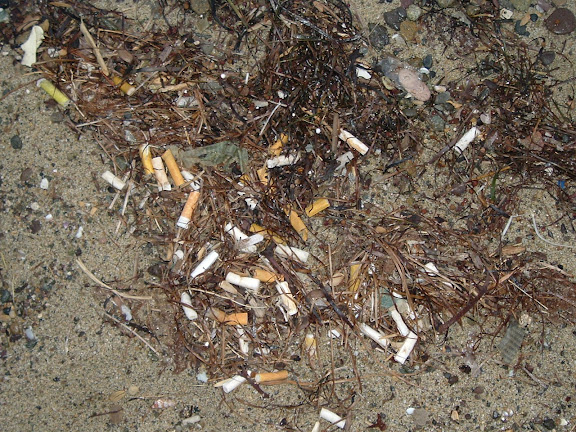
Random shots from a walk along the beach in Sarimsakli (Ayvalik), Turkey. Devamı

If there is a will, there is a way


You wouldn't think that information and communication techologies should rely on trash generation, but this apparently isn't the case.

Are we obsessed with making trash? Has the generation of trash replaced urination as a means of marking territory? Devamı